Learn With People Who Have Built What You Want to Build.
At MSTA, mentorship is not an occasional add-on. It is part of the learning journey — helping learners understand concepts, apply technology, improve projects and develop the judgment needed to solve real problems.
MSTA brings together technology practitioners, academic experts and mentors who help learners connect classroom concepts with practical applications. The objective is to make learning more guided, more contextual and more useful.
You do not need someone to give you every answer. You need someone who helps you ask better questions, test your thinking and improve what you build.
Learn. Build. Improve.
Guided learning with people who understand technology and real-world implementation.
Why Mentorship Matters
Technology learning can become overwhelming. New tools appear constantly, tutorials often present different approaches, and learners may know what to study without knowing what deserves their attention.
Clarity
Understand difficult concepts in a structured way instead of getting lost across disconnected tutorials.
Direction
Know what to learn next, which tools matter and how different concepts connect.
Feedback
Receive practical input on assignments, projects, approaches and problem-solving decisions.
Confidence
Discuss doubts, explain your thinking and become more comfortable working independently.
Good mentorship helps learners move from knowing what to learn to understanding how to apply it.
Learn From People Who Have Built It.
Technology practitioners and educators helping learners connect concepts with real-world applications.

Murthy Adivi
Technology professional, AI practitioner and educator with over two decades of experience in data, analytics, machine learning and enterprise technology.

Geetika Goel
Passionate about making complex ideas simple, accessible and relatable through practical learning experiences.
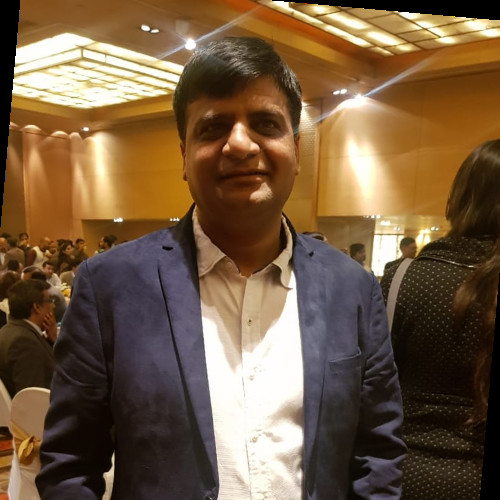
Pankaj Mittal
Helping learners move from understanding technology to experimenting, building and solving meaningful problems.
Different Problems Need Different Perspectives.
MSTA is designed to bring learners into contact with people who contribute different kinds of expertise across technology, academics, projects and professional development.
Industry Practitioners
Professionals who work with technology in real business environments and can explain how concepts translate into implementation.
Academic Experts
Faculty and subject specialists who strengthen fundamentals, conceptual understanding and structured learning.
MSTA Mentorship
Multiple perspectives. One connected learning experience.
Technology Mentors
Practitioners who support labs, assignments, projects, debugging, experimentation and solution development.
Guest Experts
Technology leaders, specialists, founders and experienced professionals who add broader industry and career perspectives.
Learn how technology is approached in practice.
For selected programs and sessions, MSTA's learning ecosystem includes alumni from institutions such as IIT Madras, IIT Kanpur and IIT Delhi, along with professionals from leading IT companies. Their role is not simply to deliver lectures, but to help learners understand how technology is approached in practice.
Mentor participation may vary by program, module, cohort and subject area so that the right expertise is aligned with the right learning requirement.
Industry exposure becomes meaningful when learners can ask: How would you approach this problem in the real world?
Mentorship Embedded Into the Learning Experience
MSTA mentorship should appear at the moments where guidance creates the most value — while understanding, practising, building, reviewing and preparing to demonstrate work.
Live Concept Sessions
Learners can ask questions, discuss examples and understand the practical context behind technical concepts.
Guided Labs
Mentors help learners move from explanation to hands-on practice and troubleshoot common implementation challenges.
Project Checkpoints
Instead of waiting until the final submission, learners can receive guidance at key stages of a project.
Review & Feedback
Mentors help identify what is working, what needs improvement and what alternative approaches could be explored.
Ask-a-Mentor Sessions
Selected sessions can focus specifically on learner questions, challenges and deeper exploration.
Capstone Guidance
Longer programs can include structured mentoring around problem selection, solution design, implementation and demonstration.
Guidance that builds independence.
The objective is not to make learners dependent on mentors. It is to progressively help them become more capable of making sound decisions on their own.
From "I Know the Concept" to "I Know What to Do Next"
Mentorship helps learners move beyond understanding concepts and develop the ability to make practical technology decisions.
Concept Clarity
Break down difficult ideas and connect them to prior learning and practical examples.
Tool Selection
Understand when a tool, model, framework or platform is appropriate — and when it is not.
Problem Framing
Convert broad ideas into clearer questions and solvable technology problems.
Project Direction
Structure a project into realistic stages, priorities, milestones and measurable outcomes.
Technical Review
Review code, data approaches, prompts, workflows, models or solution logic where relevant.
Experimentation
Compare alternatives and learn how to test rather than simply follow a fixed recipe.
Presentation
Explain your approach, decisions, results and limitations clearly.
Professional Thinking
Develop habits around documentation, iteration, validation, ethics and responsible technology use.
Mentorship Is Not About Copying the Mentor's Answer.
A strong mentor does not simply solve the problem for the learner. The mentor helps the learner understand the problem, evaluate choices and develop a better approach.
The Deeper the Program, the Deeper the Mentoring Journey
The type and depth of mentorship can evolve as learners progress from AI foundations to applied and advanced technology work.
| 01 Program | 02 Learning Stage | 03 Mentorship Focus | 04 Typical Guidance |
|---|---|---|---|
|
1 Month
FOUNDATION
|
Explore |
Foundations & confident AI usage
|
AI tools, prompting, responsible AI, practical productivity and mini-project guidance. |
|
3 Months
APPLIED
|
Build |
Applied technology & project development
|
Python, data, ML, GenAI use cases, assignments and applied project feedback. |
|
6 Months
ADVANCED
|
Master |
Deeper solution-building & capstone
development
|
Advanced ML, DL, NLP, CV, LLMs, RAG, agents, solution design and capstone review. |
Mentorship Scales With Capability
A beginner may need help understanding how to write a better prompt. An intermediate learner may need guidance on preparing data or evaluating a model. An advanced learner may need to defend an architecture choice, test a RAG pipeline or improve a capstone solution.
The mentoring experience should therefore grow with the learner rather than remain identical across all programs.
Build Something Better Than Your First Attempt.
Projects are where learners discover that knowing a concept and applying it are different skills. Mentorship helps bridge that gap.
A Typical Mentored Project Journey
Frame the Problem
Clarify the user, need, context and expected outcome before selecting technology.
Plan the Approach
Break the problem into stages and identify the data, tools and methods required.
Build a First Version
Create a working attempt instead of waiting for a perfect solution.
Review the Evidence
Evaluate results, limitations, errors and whether the solution actually addresses the problem.
Improve & Iterate
Refine the solution based on feedback and testing.
Demonstrate
Present what was built, why decisions were made and what could be improved next.
Mentorship should make the learner's thinking visible — not make the mentor the hidden author of the project.
Feedback That Helps You Improve, Not Just Score.
Useful feedback explains more than whether something is right or wrong. It helps learners understand the quality of their reasoning and where the next improvement should come from.
What Is Working Well
What is working well and should be retained.
Identify Gaps
Where the learner's approach is incomplete or unclear.
Test Assumptions
What assumptions need to be tested.
Choose the Right Method
Whether the chosen method is appropriate for the problem.
Improve the Solution
How the work could be made more efficient, reliable or explainable.
Communicate Better
How to communicate the result more professionally.
From Skills to Professional Direction
Technology careers are not one-size-fits-all. A learner interested in AI product development may need a different path from someone focused on data analytics, software engineering or business applications of AI.
Career Path Awareness
Understand different technology roles and how the skills required for them vary.
Portfolio Guidance
Identify which projects and capabilities best demonstrate your strengths.
Interview Readiness
Practise explaining projects, decisions and technical concepts with clarity.
Professional Confidence
Become more comfortable discussing what you know, what you built and what you are still learning.
Get More From Every Mentorship Session.
Come Prepared
Bring your question, context and previous attempts.
Ask Why
Understand the reasoning behind an approach, not just the steps.
Test the Advice
Apply feedback, compare results and form your own judgment.
Show Your Work
Share progress early enough for feedback to improve the outcome.
Great Learning Needs More Than Content.
It needs conversations, feedback, context and people who can help you see what you are missing.
Learn with experts. Build with guidance. Grow with confidence.
At MSTA, expert mentorship is designed to help learners move from understanding technology to applying it with greater clarity and independence.